Essential Question: How can Criminalists ensure that test results are accurate and concise?
Friday, May 27, 2016
Blog 24 - Last Presentation Reflection
(1) Positive Statement
What are you most proud of in your block presentation and/or your senior project? Why?I am most proud of putting so much effort into thoroughly researching this topic. This helped me learn a lot about forensics even without a mentor for the whole first semester of the year. I am also proud that I didn't give up on forensics and change my topic to an easier topic just because it was very difficult for me to find a mentor. As for my block presentation, I am proud of how successful my activities were in helping the audience further learn about my answers. Lastly, I am also proud of how much I improved on presenting in front of a class and speaking loudly.
(2) Questions to Consider
a. What assessment would you give yourself on your block presentation? Use the component contract to defend that assessment.
P. Met all the P consideration criteria. Dressed professionally, eye contact, engages audience, Justification of answers, organization and creativity.
b. What assessment would you give yourself on your overall senior project? Use the component contract to defend that assessment.
P. Although I missed a couple of assignments throughout the year, I continued to remain on track with my research. It was difficult to complete some assignments because I didn't have a mentor so I mainly relied on research.
(3) What worked for you in your senior project?
The best thing that worked for me in my senior project was how broad and diverse my topic is so that helped me find more quality research.
(4) (What didn't work) If you had a time machine, what would you have done differently to improve your senior project?
The one thing that didn't work was not being able to find a mentor. If I had a time machine, I would've used different search words while I was researching on forensic mentors. If I had a mentor from the beginning of the year, I would've saved my self a lot of wasted time and saved pointless research. I also would've gotten better grades on my first 2 lessons and even completed interview 2 which had to be on your mentor.
(5) Finding Value
How has the senior project been helpful to you in your future endeavors? Be specific and use examples.
I chose forensics as my senior topic because I was really interested in it and wanted to learn more about it. I even thought of forensics as a possible career option. However, after all the research I went through and the people I talked to, I now know that it isn't a job I would want to persue. I still love and enjoy forensics but it isn't a right career choice for me. Also, because I know so much about the topic of forensics, I can state why I would not want forensics as a career.
Wednesday, May 4, 2016
Blog 23 - Exit Interview Prep
My essential question is "How can a Criminalist, ensure that test results are accurate and concise?". My answer 1 to this question is the quality assurance of the work performed of criminalists. My answer 2 is the prevention of cross contamination of evidence that is done within the evidence stream. My answer 3 is the acknowledgement and compliment of new technology that is being released to help improve the work of forensics. My best answer would have to be answer 2, the prevention of cross contamination of evidence done in the evidence stream. This is because cross contamination is mostly human error and although no one can be perfect, there is still a lot that can be done to minimize that factor and thus leading to a criminalist ensuring that test results are accurate and concise.
(2) What process did you take to arrive at this answer?
My mentor actually talked to me about cross contamination and how it is a big deal within criminalistics. From that, I started to touch base on it and begin digging deeper into the research of it. In an interview with my mentor, she stated that cross contamination is a very important issue in the field of forensics, or criminalistics to be exact.
(3) What problems did you face? How did you resolve them?
My biggest problem was finding a mentor. For about the whole first semester of this school year, I could not find a mentor. I called about every forensic laboratory, sheriff department, coroner office and mortuary within Southern California. I finally resolved that problem by encountering forensicscienceacademy.org and called Terri Armenta where she gladly accepted to become my mentor for the remainder of the year.
(4) What are the two most significant sources you used to answer your essential question and why?
The two most significant sources I used to help me answer my essential question was, first, my mentor and second, the Innocenceproject.org. These sources have given me much more than just answer, but more knowledge that can positively affect me when giving my final presentation.
Friday, April 22, 2016
Blog 22 - Independent Component 2
LITERAL
- I, Eden Reyna, affirm that I completed my independent component which represents 32 hours of work.
- Armenta, Terri. "Forensic Training Unlimited." Terriarmenta.com. N.p., n.d. Web. 22 Apr. 2016. <http://www.terriarmenta.com/>
Neufeld, Peter, and Barry Scheck. "Home - The Innocence Project." Home - The Innocence Project. MADEO, n.d. Web. 22 Apr. 2016. <http://www.innocenceproject.org/>
- Independent Component 2 Log
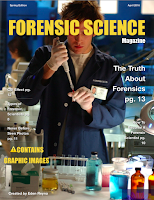
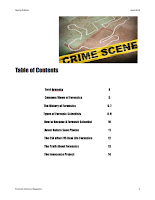
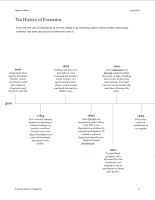
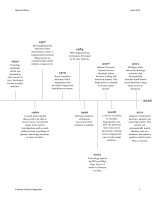
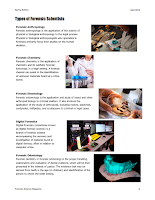
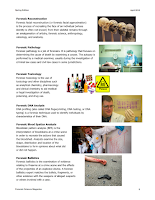
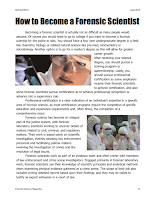
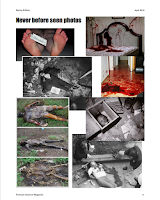
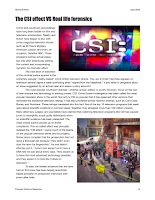
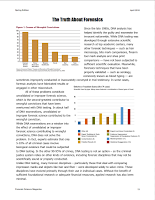
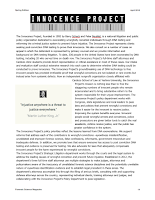
- I completed a 15 page magazine explaining different topics within forensics. It begins with a typical magazine cover to engage readers and quickly points out the important information within the magazine. Which I made my self with some help of photoshop. With a well organized table of contents, I began my research and image searching to help everything flow.
- The amount of time I put into this component has felt like way more than 30 hours but when I added up my hours, it came down to 32 hours. This magazine has significant meaning to me because I feel like it is a way for my to talk to people about forensics in a way that I normally cant. It also allows me to express my self about forensics in a more interesting way. Because I already know a sufficient amount of forensics, it was difficult for me to write. Formatting and getting everything to fit and look nice took the longest and also finding nice relevant pictures.


- The component helped me answer my EQ in a way that I can look back and use my own magazine as a resource for forensics. It helped my answers for my EQ become more organized and helped me understand more. Also when I was researching for more input into context, I found more sources that could be really helpful towards my final presentation.
Friday, April 15, 2016
Blog 21 - Interview 4 Reflection
The most important thing I learned from this interview is that forensic scientists try their best to avoid errors that can affect their work. AFIS technicians use the method of double checking with over pair of eyes and is actually a well known standard within the field of forensics.
2. How will what I learned affect my final lesson?
What I learned will affect my final lesson by providing a different perspective of forensics and also giving me more accreditation of my research and final answers.
Interview 4
Wednesday, March 9, 2016
Blog 20 - Interview 4 Preparation
1. Who do you plan to interview? What is this person's area of expertise?
I plan to interview Angel Gonzalez who is an AFIS Technician II at the Sheriff's Department of the County of Los Angeles.
2. Post 20 open-ended questions you want to ask an expert in the field concerning your senior project. Your focus should be finding answers to your EQ.
- How would you describe your job and what you do?
- How did you get to where you are now in your career?
- What obstacles did you have to face?
- What is your opinion on the broad topic of forensics?
- What is fingerprint analysis and what is AFIS?
- I understand fingerprint analysis is very tedious and involves a lot of room for errors. How do you deal with something like that?
- How do you deal with errors if any?
- How do you prevent errors?
- Would you say that say method would apply to other forensic fields? How?
- Do you think forensics is in badly need of reform? If so, why?
- Are you aware of the Innocence Project? If so, what is your opinion on it?
- How do you feel about the CSI effect?
- In what ways do you think it affects real life forensics?
- My EQ is How can a forensic scientist ensure that an analysis of a crime is correct. How would you answer it?
- Do you think quality assurance along with accreditation and also knowledge of modern technology can thoroughly answer my EQ?
- How are you able to know that the field of forensics will become more accurate after the possible solution is taken into place?
- How important is technology within the field of forensics?
- After researching on this topic for several months now, what kind of resources do you recommend that can help me get my answers into a concrete state?
- The government needs to provide more funding into forensics although the Coverdell Act is already in place and a lot of reform is needed within the labs. Do you think analysts need to be more frequently certified to improve forensics or is there another area/field that can make a greater impact?
Wednesday, March 2, 2016
Blog 19 - Third Answer
How can a Forensic Scientist ensure that an analysis of a crime is correct?
Forensic scientists need to keep up with their training in order to be kept up with any type of new emerging technologies and techniques that might affect their job.
There is new technology constantly emerging in today's society and a lot of which can help improve the work of forensics.
Without rigorous training and certification, forensic scientists would have no clue about improving forensics and what they can do to contribute to it.
There are many different techniques of forensics in the world today but not all are available to forensics within the U.S. thus explaining why scientists need to constantly be trained.
Interview 3
Mentorship
Many forensic scientists working now, already have the education and the credentials but just like teachers, they need to be constantly trained and accredited to ensure that they can give correct analysis' by keeping up with new emerging technologies.
Thursday, February 18, 2016
Blog 17 - Interview 3 Reflection
1. What is the most important thing I learned from the interview?
The most important thing I learned from the interview, is that forensics isn't as bad as I thought it was. It still has some flaws but a lot of other careers do too and the benefit is that it is improving.
2. How has your approach to interviewing changed over the course of your senior project?
It has changed the course of my senior project because I found flaws in my essential question and answer that I need to fix.
Interview 3
Wednesday, February 10, 2016
Blog 16 - Independent Component 2 Approval
1. Describe in detail what you plan to do for your 30 hours.
For my Independent Component 2, I plan to make a Forensics magazine to let people know that forensics is more than just what Hollywood shows on TV. I want to let people know the real world of forensics and how much more complicated. I feel that forensics on tv, is given too much credit for not fully letting their viewers know what forensics is. I chose to do a magazine because it is the most modern form of physical communication besides social media. plan to start with a magazine template and write articles about different view points of my topic. I'll add relevant pictures that will catch readers attention to read the articles. I could even include interviews with my mentor or people who have an opinion towards forensics. I'll also include how to become a forensic scientist and what it takes to become a great one. Towards the end of my magazine, I'll show statistics of how people know about forensics. Whether it'd be from fiction tv shows, reality tv series or know someone in the field. After it's all done, I'll print it on fancy paper and bind it all together to make it look like a legitimate magazine. This was my IC #1 idea but I did not have a mentor at the time to give me suggestions.
2. Discuss how or what you will do to meet the expectation of showing 30 hours of evidence.
For my forensics magazine, I plan to do research from the inside out on the history of forensics. Then write articles explaining what they actually do and how forensic scientists aren't paid enough for what they do. I'll also explain that there are some flaws of forensics and what we can do to fix this because it can cause innocent people to be convicted. The more people know about real life forensics, the more research and funding goes to creating a solid foundation of forensic science in the future. The more people know about what it takes to become a forensic scientist, the more people will appreciate it and respect it.
3. Explain how this component will help you explore your topic in more depth.
Creating a forensic magazine will help me understand that as the technology of forensics is always evolving and improving, so should the analysis and projection of research towards this unique career. Forensic science is in badly need of reform and I feel that it is only possible if society knows what forensics is really about.
4. Post a log in your Senior Project Hours link and label it "Independent Component 2" log.
Friday, February 5, 2016
Lesson 2 Reflection
1. What are you most proud of in your Lesson 2 Presentation and why?
I am most proud of my enunciation through out the presentation because I usually have a low volume while speaking. Also I am really proud of the organization of my presentation and how it flowed really well and caused me to meet the minimum time limit.
2. a. What assessment would you give yourself on your Lesson 2 Presentation (self-assessment)?
P
b. Explain why you deserve that grade using evidence from the Lesson 2 component contract.
According to the lesson 2 component contract, I give myself a P. I don't think I had any concern with professionalism because I spoke loud and clear, made eye contact, and engaged and interacted with the audience. No concern with the organization and creativity nor the audience involvement. Also, I provided more than 1 quality published research source cited.
3. What worked for you in your Lesson 2?
Having more time to present really helped me and worked for me in my lesson 2. I was able to say whatever I needed to say and go into depth about it. Another thing that worked was being able to have a powerpoint because it really helped organize my presentation and helped me stay on track with time.
4. What didn't work? If you had a time machine, what would you have done differently to improve your Lesson 2?
I would have done my activity differently. I would've came up with a more engaging and creative activity that helped the audience further learn my answer but 10 minutes was just not enough time to do a different more engaging activity.
5. What do you think your answer #2 is going to be?
I think my answer #2 is going to be the improvement of standards set in forensics with federal support. Basically, getting more funding to improve forensic techniques and further research to reduce human error and reduce the number of wrongful convictions.
Blog 15 - Independent Component 1
LITERAL
INTERPRETIVE
APPLIED
- I, Eden Reyna, affirm that I completed my independent component which represents 31.5 hours of work.”
- Armenta, Terri. "Forensic Training Unlimited Online Academy." Forensic Training Unlimited Online Academy. N.p., n.d. Web. 04 Feb. 2016. and my mentor Terri Armenta who created these courses for dedicated forensic students and helped me know more about forensics.
- Independent Component Hours #1
- I enrolled in 5 different online courses on the Forensic Training Unlimited Online Academy. These courses being #1 Forensic evidence: types and classifications- know what to collect, #2 Unusual Suicides: Investigation, Pathology and evidence, #3 Underwater Forensics: Investigating Water Related Deaths, #4 Death Investigation Series: Positional Asphyxiation and Forensic Implications, and #5 Forensic Science Academy: Get hands-on training and start your forensic career.
This specific course taught me that there are different types of evidence and it is significant to my project because it provides more information that I can use to answer my EQ.
This course helped me learn the investigative process of forensics and some mistakes it has.
This course helped me learn about decomposition of a body and it also provided videos that helped me further comprehend the content.
This course about positional asphyxiation taught me another side of forensics that I didn't know about before and introduced me to some new forensic terminology.
This course taught me the many different views of forensic science and how I can start my career in forensics.
APPLIED
- The component helped me understand the foundation of my topic better by extending my research field. During the 30 hours that I have spent on these courses, I have been introduced to another field of forensics and a wide range of terminology that will help me extend my knowledge of forensics and help me pin point my answer for my EQ. The courses almost always provide real-life case studies to help the students further comprehend the curriculum and prove that it is a credible source for information.
Wednesday, January 13, 2016
Blog 14 - Interview 3 Preparation
1. Who do you plan to interview? What is this person's area of expertise?
I plan to interview one of the forensic specialist that my mentor can get me in contact with. My mentor told me that she can have me meet some professionals but never gave me names. The person's area of expertise is a professional in the forensics field.
2. Verify that you have called your interviewee to schedule an interview. What is the date and time of the interview?
I have not called my interviewee yet. I am meeting with my mentor this weekend and I will ask for the contact info to schedule the interview.
3. Phrase an open-ended question that will help you find research resources that would help to answer the EQ.
"After researching on this topic for several months now, what kind of resources do you recommend now that I've found a possible solution to my EQ?"
4. Phrase an open-ended question that will help you think about other useful activities you might do to help you answer the EQ (IC2, possible experts to talk to, etc).
"How are you able to know that the field of forensics will become more accurate after the possible solution is taken into action?"
5. Phrase two open-ended questions that help you to understand your interviewee's perspective on an aspect of your EQ.
"Do you think forensics is in badly need of reform? If so, why?"
"How do you feel when people ask you questions about your job based on what they've seen on TV? Do you think it is a major issue and needs to be solved?"
Thursday, January 7, 2016
Blog 13 - 10 Hour Mentorship Check-In
1. Where are you doing your mentorship?
I am doing my mentorship at the Forensic Science Academy located in Rancho Cucamonga and also at the Ontario Police Department.
2. Who is your contact? What makes this person an expert?
My contact at Ontario Police Department is Officer Yzaguirre. Although he is not officially considered an expert in this field, he has had a lot of experience being a first responder in a investigation. My contact at the Forensic Science Academy is Terri Armenta who is a Forensic science educator and career expert. She is an expert because she has been a forensic teacher, educator and mentor for a long time and has helped many students pursue their forensic career.
3. How many hours have you done during the school year? (Summer Mentorship Hours and Mentorship Hours should be reflected separately in your Senior Project Hours log located on the right hand side of your blog).
So far, I have done 10.5 hours so far because I've had trouble finding a mentor until now.
4. Succinctly summarize what you did, how well you and your mentor worked together, and how you plan to complete the remaining hours.
I started my hours with Officer Yzaguirre. He told me about calls/cases that he's been on as a first responder. He had Officer Albert take me on a ride along so I can see up close what they do everyday as a first responder. Then I got to talk to a forensic specialist who gave me advice on research. My mentor and I work well together and I've known him for a while so I feel comfortable with him. I plan to complete the remaining hours with my other mentor, Terri. We haven't done any hours yet but we've planned them and she's offering forensic courses that I will definitely take.
Monday, January 4, 2016
Blog 12 - Holiday Project Update
1. It is important to consistently work on your senior project, whether it is break or we are in school. What did you do over the break with your senior project?
I called more people who are linked with forensics and actually came across a Forensic Science Academy. I got in contact with Terri Armenta and she agreed to be my mentor and offer me courses to take at the academy. Then, I got in contact with Officer Yzaguirre from Ontario Police Department and took me on a ride along to get a real life view of a first responder of a crime. I also got a tour of the police department and some of the forensic labs.
2. What was the most important thing you learned from what you did, and why? What was the source of what you learned?The most important thing that I learned was that forensics needs to be taken more seriously because it is a very tedious job that requires a lot of patience. Jill Padilla, a forensic specialist I spoke to, told me about this problem and how it makes her job harder.
3. Your third interview will be a 10 question interview related to possible answers for your EQ. Who do you plan to talk to and why?
I plan to talk to my mentor, Terri, or probably Jill because I have already talked to Jill about what I'm leaning more towards in forensics. Because my EQ is based on human error on analysis of crimes, Jill has told me situations she has ran into because of common human error. Also I thinks she has some ideas on how to find a solution to this problem.
Thursday, November 5, 2015
Blog 11 - Lesson 1 Reflection
1. What are you most proud of in your lesson, and why?
I am most proud of the amount of research I provided in my lesson because this helped me reach the maximum time limit and the audience really comprehended it.
2. What assessment would you give yourself on your lesson? Explain why you earned that grade using evidence from the component contract.
According to the component contract, I would give myself an AP because I know I had a problem with my volume and enunciation and I didn't reference my cited research source. Besides that, I made eye contact with the audience and engaged them with visuals. As well as, providing a great depth of clear and concise research and referencing my current mentor status since I do not have a mentor.
3. If you could go back, what would you change about your lesson? How can you use that knowledge to give a better Lesson 2?
If I could go back, I would prepare more for my lesson and make it more organized to help the content flow smoother. I can make a better lesson 2 by practicing the coordination of content to timing. Also, I should have a mentor by lesson 2 who can help me with more information and real life examples.
Thursday, October 29, 2015
Blog 10 - Interview 2 Reflection
1. Please explain how you are spending your mentorship time (Is it at a workplace or somewhere else? Are you shadowing? Are you able to do tasks that are meaningfully related to the topic? If so, what? Are there other people who are experts in the location? Etc...)
I do not yet have a mentor but I am currently working on it.
2. How did you find your mentor? How did you convince this person to help you?
I am planning to join the Pomona explorers program to find connections to the Forensics team.I do not yet have a mentor but I am currently working on it.
2. How did you find your mentor? How did you convince this person to help you?
3. How would you rate your comfort level with your mentor at this point in your relationship? How does this relate to the time you've spent so far at mentorship/with this person?
When I do have a mentor, I hope to have a high comfort level with my mentor because it can make mentorship much more enjoyable.
4. What went well in this interview? Why do you think so? What do you still need to improve? How do you know? How will you go about it?
I have not yet done my interview 2 because I don't have a mentor. Once I have my mentor, I hope everything will go well with my interview 2.
Wednesday, October 21, 2015
Blog 9 - Advisory Prep 3
1. State whether or not you currently have a mentor, and what the status of your interview is with that person (I have completed the interview, I have scheduled the interview, I have not scheduled the interview, etc).
I do not currently have a mentor but I hope to have one in a couple of weeks. Therefore, I have not scheduled the interview yet.
2. At this point, your research is probably guiding your studies toward more specific areas within your topic. Name the area or two you find most promising and explain your reasons.
Criminalistics/Forensic Chemistry (basically the same thing) or Forensic DNA analysis. Criminalistics/Forensic Chemistry is a promising, more specific area of Forensic science because it involves the examination and analysis of all evidence, which allows there to be more research. Forensic DNA analysis involves the analysis of DNA that is found at a crime scene to match a suspect or victim. DNA analysis is a promising topic because it is the most exclusive tool CSI has to fight crime today and there is also a lot of controversy about the science behind it being correct.
3. What kinds of sources do you think will help you in the next month to gain more research depth? Where will you go to get them?
In the next month, I will continue to search the internet because I know there is a whole other side of Forensics I have yet to find. After I run out of sources online, I can check out Forensic books at the library and even look up informational videos on YouTube.
4. Write down a possible EQ. Please don't worry about wording other than ensuring that it provides the option for multiple correct answers. At this point, the senior team is most interested in understanding your thought process.
What is the best way to insure that a Forensic DNA analyst is giving a correct detailed analysis of the crime so it does not lead to an innocent person being wrongly convicted?
Wednesday, October 7, 2015
Blog 8 - Independent Component 1 Proposal
I plan to make a Forensics magazine to let people know that forensics is more than just what Hollywood shows on TV. I want to let people know the real world of forensics and how much more complicated. I feel that forensics on tv, is given too much credit for not fully letting their viewers know what forensics is. I chose to do a magazine because it is the most modern form of physical communication besides social media. plan to start with a magazine template and write articles about different view points of my topic. I'll add relevant pictures that will catch readers attention to read the articles. I could even include interviews with my mentor or people who have an opinion towards forensics. Towards the end of my magazine, I'll show statistics of how people know about forensics. Whether it'd be from fiction tv shows, reality tv series or know someone in the field. After it's all done, I'll print it on fancy paper and bind it all together to make it look like a legitimate magazine.
2. Discuss how or what you will do to meet the expectation of showing 30 hours of evidence.
For my forensics magazine, I plan to do research from the inside out on the history of forensics. Then write articles explaining what they actually do and how forensic scientists aren't paid enough for what they do. I'll also explain that there are some flaws of forensics and what we can do to fix this because it can cause innocent people to be convicted. The more people know about real life forensics, the more research and funding goes to creating a solid foundation of forensic science in the future.
3. Explain how what you will be doing will help you explore your topic in more depth.
Creating a forensic magazine will help me understand that as the technology of forensics is always evolving and improving, so should the analysis and projection of research towards this unique career. Forensic science is in badly need of reform and I feel that it is only possible if society knows what forensics is really about.
4. Update your Senior Project Hours log.
Wednesday, September 30, 2015
Blog 7 - Second Interview Preparation
1. Who is your mentor and where do they work? If their workplace does not reflect their expertise, what makes them an expert?
I currently do not have a mentor but I hope to have one before the interview is due, which is the end of the month.
2. What five questions will you ask them about their background?
- What motivated you to become a forensic scientist? Why?
- What issues did you face while pursuing this topic as a career?
- Did you expect to take this specific career pathway when you were my age?
- I know that being a forensic scientist you are an expert court witness. When you first became a forensic scientist, how did you feel about that?
- Do you think all the schooling you went through, to get to the profession you are at now, was all worth it?
Wednesday, September 23, 2015
Blog 6 - Advisory Prep
1. What has worked well for you concerning senior project this year? What has made it a positive experience for you?
Concerning senior project this year, I think research on my topic has really worked well for me. Because my topic is forensic science, there is a lot of sources out there and it is really interesting so the research doesn't feel repetitive. I think whats made it a positive experience for me is that I really like this topic and I have a passion for it. Therefore, doing all this research on my topic is kind of fun and it might even be a potential career for me.
2. What are you finding difficult concerning senior project? How can you adapt to make that portion work better for you? How might the senior team help?
At the moment, it is really difficult for me to find a mentor on forensic science. I feel like as soon as I find a stable mentor for my senior topic, everything will run smoothly from there. I am currently waiting on available internship spots at the LA county medical examiner.
Thursday, September 17, 2015
Blog 5 - Interview 1 Reflection
1. What is the most important thing I learned from the interview? Is there anything I would do differently for other interviews?
The most important thing I learned from this interview is that I can get a lot of information from any possible source about forensic science because forensics contains so much science that even if it seems surreal, there's always science. Especially with the crime fiction shows/novels, the plot may seem too extreme and may be unrealistic but the science of forensics can never be hidden. For other interviews, I would ask better, more interesting questions to make the interview less boring.
2. Did I get additional resources and contacts? What is the most useful? Why?
I got some additional resources about different perspectives of forensics. Other than that, I didn't get any resources or contacts. But it was really useful to dig deeper into researching different view points of forensics because like all things, it is not 100% perfect. No matter which way you look at it.
3. What makes my interviewee qualified to help me?
My interviewee was qualified to help me because she has a lot of knowledge of my topic of forensic sciences. Although she is not an actual forensic scientist, she studied forensic science in college and is continuing to become one.
Subscribe to:
Posts (Atom)